Cashew in General
1. Cashew Overview
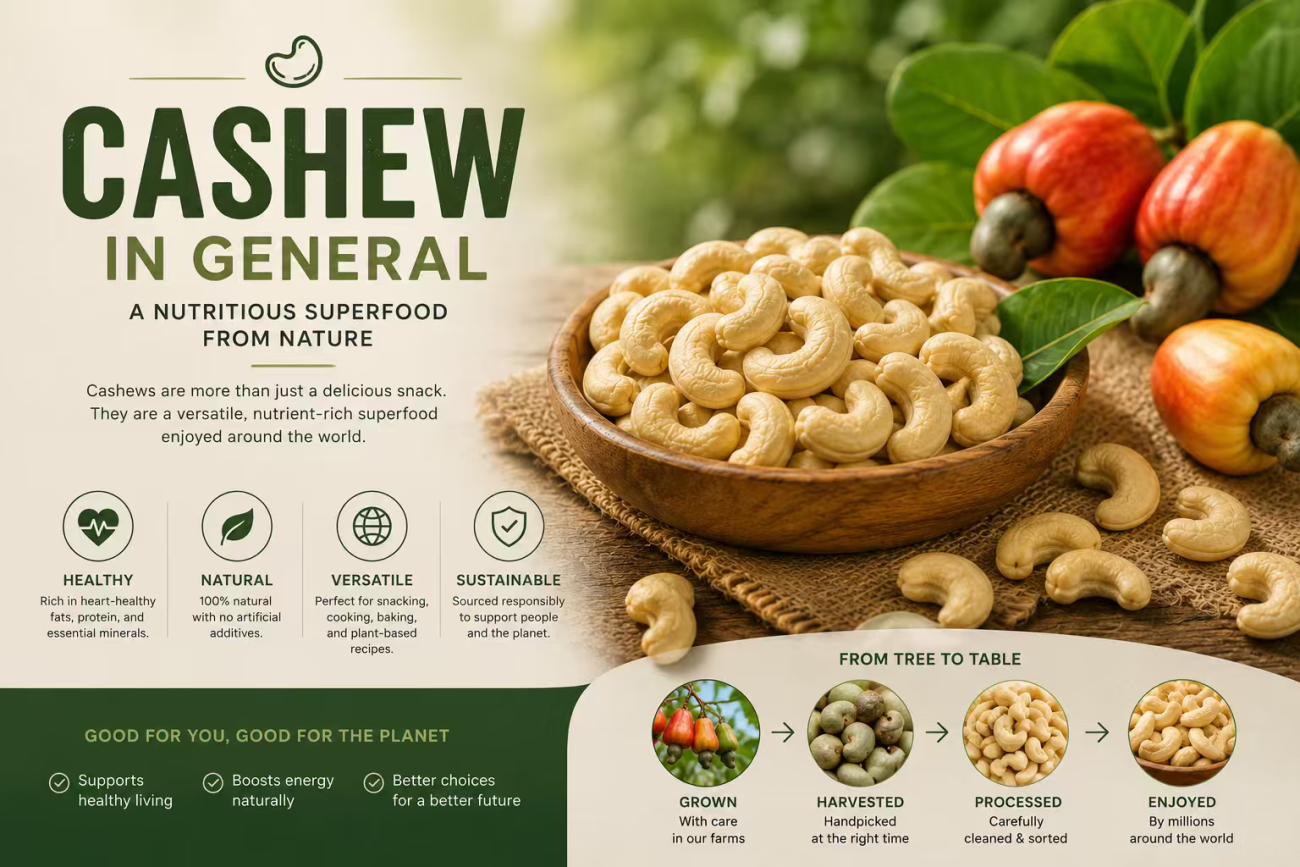
Cashew (Anacardium occidentale L.) belongs to the Anacardiaceae family, which includes around 60 genera and over 400 species. Other well-known members of this family include mango (Mangifera indica L.) and pistachio (Pistacia vera L.).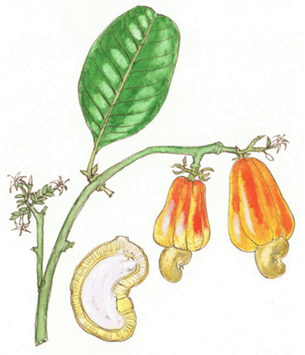
Cashew trees are evergreen and fast-growing, reaching up to 20 meters under optimal conditions, although they typically grow between 8 and 12 meters.
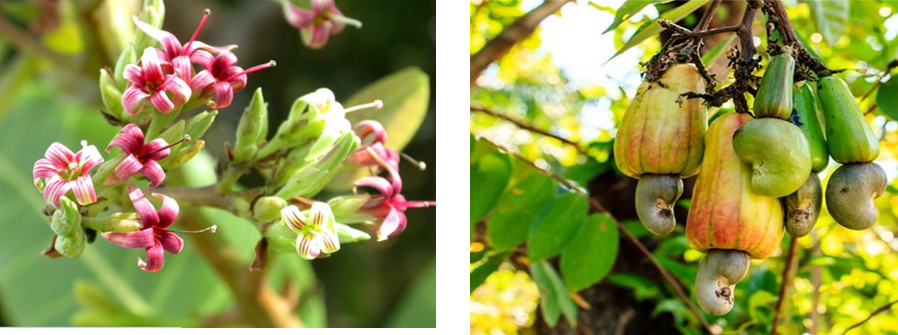
The species is andromonoecious, meaning that both male and hermaphrodite flowers are present on the same plant, often within the same panicle.
2. Global Production & Growing Regions
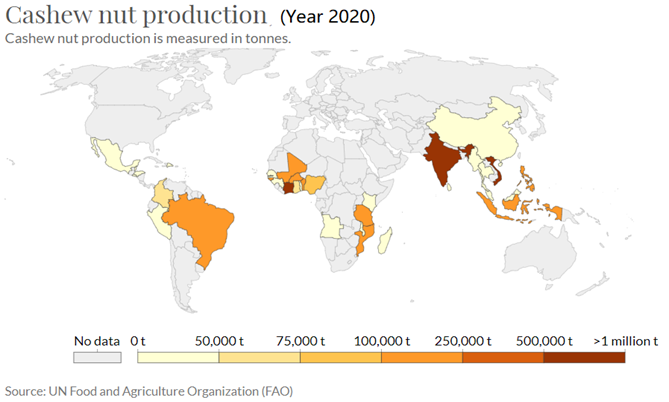
Cashew is widely cultivated in tropical regions around the world.
-
-
- – Northern Hemisphere producers: India, Vietnam, West Africa
-
-
-
- – Southern Hemisphere producers: Brazil, East Africa
-
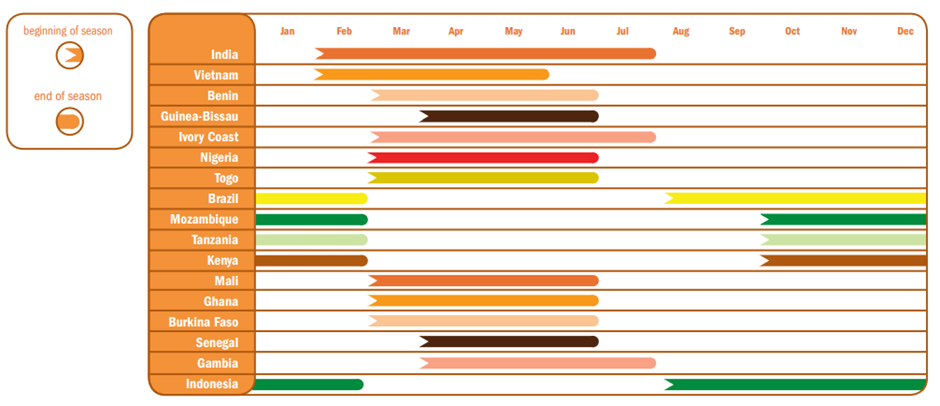
Harvest seasons vary depending on proximity to the equator:
-
-
- – Northern regions: early year to mid-year
-
-
-
- – Southern regions: October to early the following year
- – Southern regions: October to early the following year
-
3. Cashew Harvesting
Flowering periods differ by region:
-
-
- – Northern Hemisphere: December – April
-
-
-
- – Southern Hemisphere: June – December
-
After pollination, the cashew nut develops first, followed by the cashew apple (false fruit).
Key stages:
-
- – Nut develops rapidly (reaches ~80% size early)
-
- – Apple grows and changes color (green → yellow/red)
-
- – Shell hardens and kernel forms inside
-
- – Fruit falls naturally when mature
Harvesting is done during dry weather, once apples are fully ripe.
After harvesting:
-
- – Nuts are separated from apples
-
- – Sun-dried for 2–3 days
-
- – Transported to processing facilities
- – Transported to processing facilities
4. Cashew Processing
Traditional Processing Steps:
-
- Roasting
- Shelling
- Drying
- Peeling
- Grading
- Quality control / fumigation
- Packaging
 Shelling is traditionally labor-intensive and done manually, but modern processing facilities now use advanced equipment to improve efficiency and consistency.
Modern Processing (Automated Factories)
Modern facilities use advanced equipment for:
-
- Size sorting
-
- Boiling / steaming
-
- Mechanical shelling
-
- Drying
-
- Peeling
-
- Automatic grading
-
- Quality control
-
- Packaging
Automation improves efficiency, consistency, and food safety.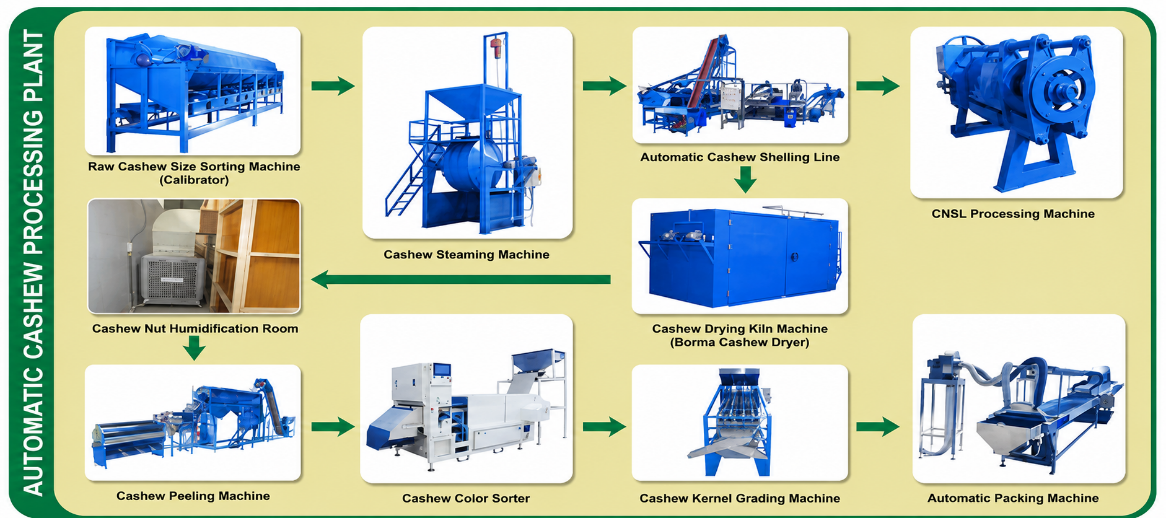
5. Cashew Grades
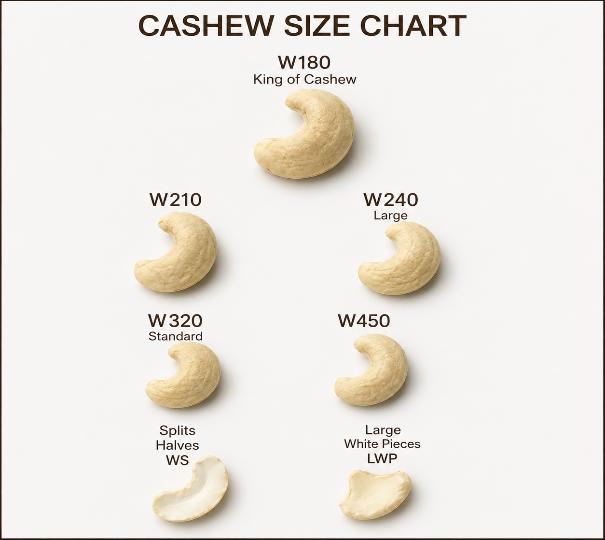
Cashew kernels are graded based on:
-
- – Size
- – Shape
- – Color
This grading directly affects pricing.
Whole Grades (White Wholes)
W180 – Largest, premium quality (“King of Cashews”)
W210 – Super Premium quality
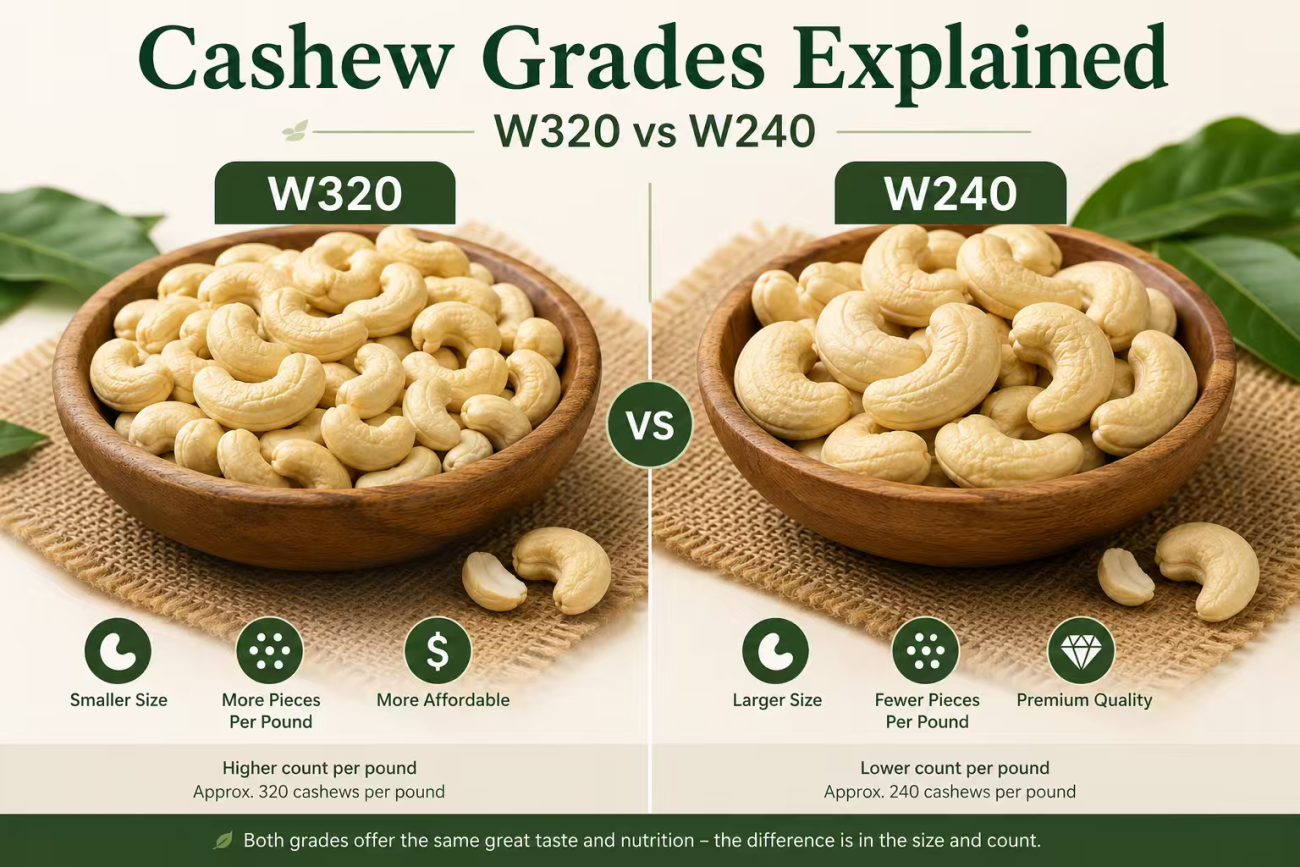
W240 – Standard premium grade
W320 – Standard grade, Most popular and widely traded
W450 – Smaller size, more economical
Other Categories
Scorched Wholes (SW)– Scorched whole kernels
SW240
SW320,
SW
SSW
Dessert Wholes (DW) – Dessert whole kernels.
DW- DW cashew are whole cashew kernels with minor visual imperfections but good flavor and nutritional quality, Appearance variation do not affect processing performance. And idea for cooking, baking, and food processing, especially where kernels are further processed or mixed with other ingredients.
Pieces & Splits
Butts (B) – WB -Cashew kernels broken crosswise into uniform pieces. They retain full cashew flavor and nutritional value at a more competitive price than whole kernels.
Splits (S) – White Splits (WS) – Cashew kernels separated lengthwise, offering a distinctive shape and clean white color, this grade is widely accepted in the global cashew trade. WS cashews are suitable for roasted and seasoned snack products, where split kernels provide visual differentiation.
Large White Pieces (LWP) – consist of white cashew kernels broken into large pieces with a rich, nutty flavor, this grade offers excellent functionality for both snack and industrial processing.
Small White Pieces (SWP) – SWP are white cashew kernels broken into small, uniform pieces and provide consistent quality and cost efficiency for large-scale processing. And widely used in bakery, confectionery, cereals, and industrial food production.
Baby Bits (BB) – veryt small pieces of cashew and similar function of SWP
6. Packaging
There is no single standard, but common export packaging includes:
-
- – 22.68 kg(50lb) vacuum-sealed bags
-
- – Nitrogen / CO₂ flushing to extend shelf life
-
- – Airtight tins for premium storage
7. Quality Assurance
Cashew production follows strict international standards to ensure food safety.
– GAP (Good Agricultural Practices)
– GMP (Good Manufacturing Practices)
– HACCP (Hazard Analysis Critical Control Point)
– BRC ( British Retail Consortium)
These ensure control over:
-
- – Contaminants
-
- – Pesticide residues
-
- – Microbiological safety
8. Cashew Nut Shell Liquid (CNSL)
Cashew shells contain a non-edible oil called CNSL
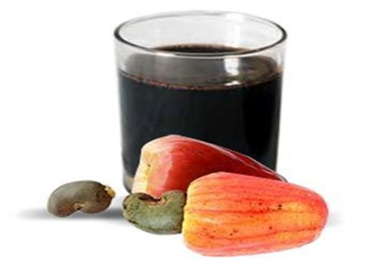
Characteristics:
Rich in phenolic compounds
Contains:
~70% anacardic acid~18% cardol~5% cardanol
Applications:
– Industrial resins
– Friction materials
– Coatings and chemicals