
Cashew Packaging & Shelf Life

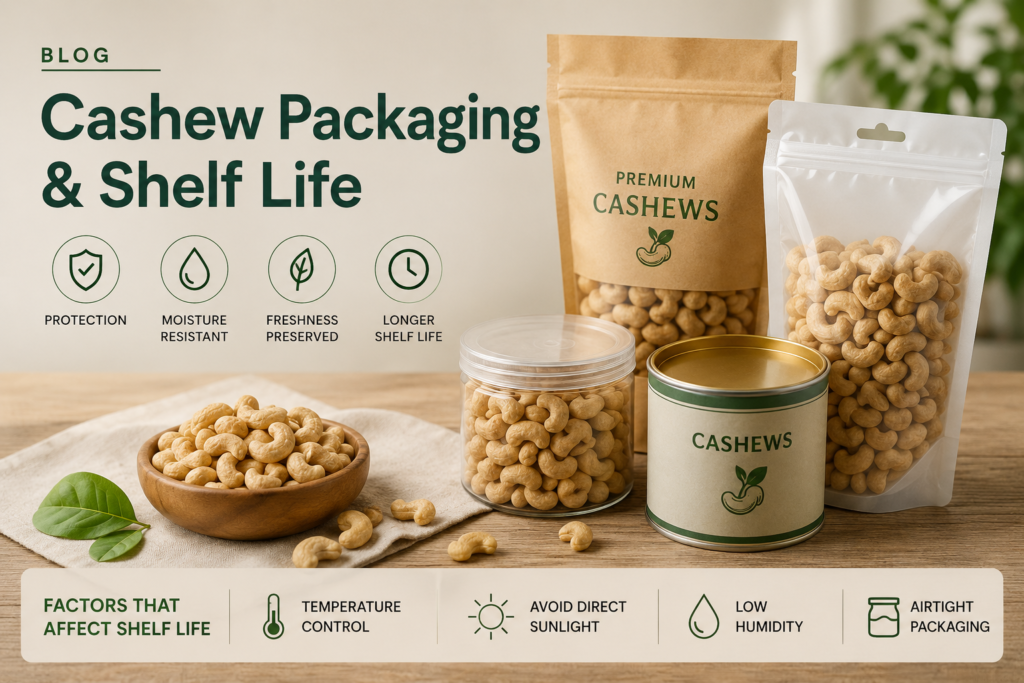
1. Why Packaging Matters for Cashews ?

Cashews are highly sensitive to: 

    • – Moisture
    • – Oxygen
    • – Temperature
    • – Light exposure 

Improper packaging can lead to:

    •  – Loss of freshness
    •  – Rancidity (off-flavor)
    •  – Reduced shelf life

👉 For European buyers, proper packaging is essential to maintain quality during transport and storage.

2. Standard Export Packaging

There is no single global standard, but the most commonly used export packaging includes:

Vacuum Polybags

    • – Typically, 22.68 KG
    • – Air is removed to reduce oxidation
    • Often flushed with nitrogen (N) or carbon dioxide (CO)

👉 This is the most widely used packaging for international trade.

Cartons

    • – Strong corrugated boxes
    • – Protect against physical damage during transport
    • – Usually 22.68 KG vacuum bags

Airtight Tins (Less common)

    • – Used for premium markets
    • – Provides maximum protection
    • – Higher cost

3. Shelf Life of Cashew Kernels

Under proper storage conditions:

    • – Vacuum-packed cashews :  12 to 24 months
    • – Opened packaging:  3 to 6 months (depending on storage conditions)

4. Recommended Storage Conditions

To maintain quality, cashews should be stored:

    • – Temperature: below 10–15°C
    • – Humidity: low and controlled
    • – Environment: dry, clean, and odor-free

👉 Avoid:

    • – Direct sunlight
    • – High humidity
    • – Strong odors (cashews absorb smells easily)

5. Transportation Considerations

For shipments to Europe:

    • – Use dry containers
    • – Ensure proper ventilation
    • – Avoid temperature fluctuations
    • – Protect from moisture ingress

👉 Transit conditions directly affect final product quality.

6. Quality & Food Safety Compliance

Professional suppliers ensure packaging meets international standards:

    • – Food-grade materials
    • – HACCP compliance
    • – Proper fumigation (if required)
    • – Traceability and labeling

7. Best Practices for European Buyers

To maximize shelf life:

    • – Keep products sealed until use
    • – Store in controlled warehouse conditions
    • – Rotate stock (FIFO: First In, First Out)

🟨 Conclusion

Proper packaging and storage are essential to preserve the freshness, taste, and quality of cashew kernels.

For European importers and distributors, choosing the right packaging ensures:

    • – Longer shelf life
    • – Reduced product loss
    • – Consistent product quality

Looking for securely packaged cashews for the European market? 

Re: AFRGO NUTS – We supply vacuum-packed, export-ready cashews with reliable quality and shelf stability.

👉 Contact us for specifications and pricing
Cashew Grades Explained (W320 vs W240)

BLOG03 – Cashew Grades Explained (W320 vs W240)

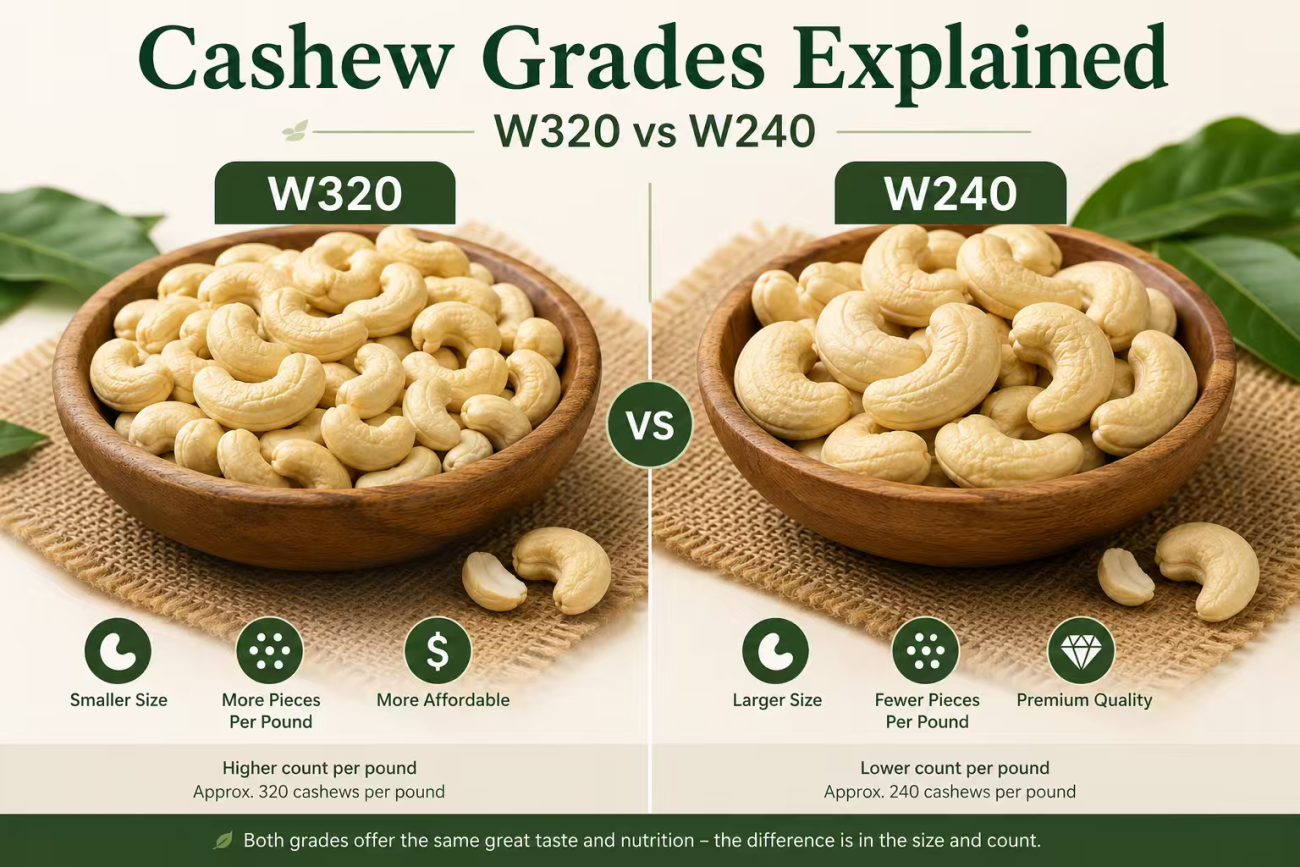
1. What Do Cashew Grades Mean?

Cashew kernels are graded based on:

  • Size (number of kernels per pound)
  • Appearance (whole, broken, color)
  • Quality consistency

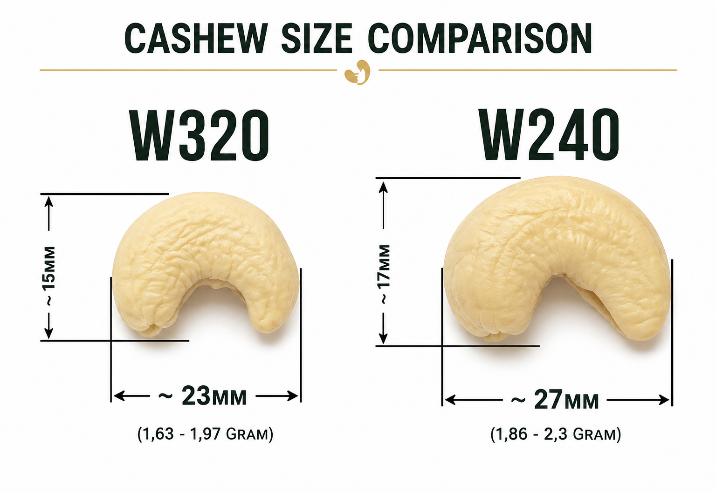
The “W” in W320 or W240 stands for “White Whole”, meaning the kernels are whole and naturally light in color.

The number refers to how many kernels are contained in one pound (lb).

👉 Lower number = larger size = higher price

2. W320 vs W240 – Key Differences

Grade

Size

Kernels per lb

Market Position

W240

Larger

~220–240

Premium

W320

Medium

~300–320

Standard / Most popular

3. W320 – The Most Popular Choice

W320 is the most widely traded cashew grade globally.

Why buyers choose W320:

  • Excellent balance between size and price
  • High availability
  • Suitable for retail and food processing
  • Strong consumer acceptance

👉 Ideal for:

  • Wholesalers
  • Retail packaging
  • Snack brands

4. W240 – Premium Quality Option

W240 kernels are larger and more visually attractive.

Advantages:

  • Bigger size
  • Higher perceived quality
  • Better presentation for premium markets

👉 Ideal for:

  • High-end retail
  • Luxury snack brands
  • Gift packaging

5. Price vs Value Consideration

  • W240 → Higher price, premium positioning
  • W320 → More competitive price, higher volume

👉 For most European buyers, W320 offers the best commercial value.

6. Which Grade Should You Choose?

It depends on your business:

  • Looking for volume + competitive pricing → choose W320
  • Targeting premium positioning → choose W240

Many importers combine both grades to balance margin and product range.

🟨 Conclusion

Both W320 and W240 are high-quality cashew grades, but they serve different market needs.

  • W320 = market standard, high demand
  • W240 = premium size, higher value perception

Choosing the right grade depends on your target customers and pricing strategy.

Looking for W320 or W240 cashews in Europe?<br>AFRGO NUTS – We supply consistent, high-quality kernels with reliable delivery across the European market.

👉 Contact us for pricing and samples

Cashew in General

Cashew in General

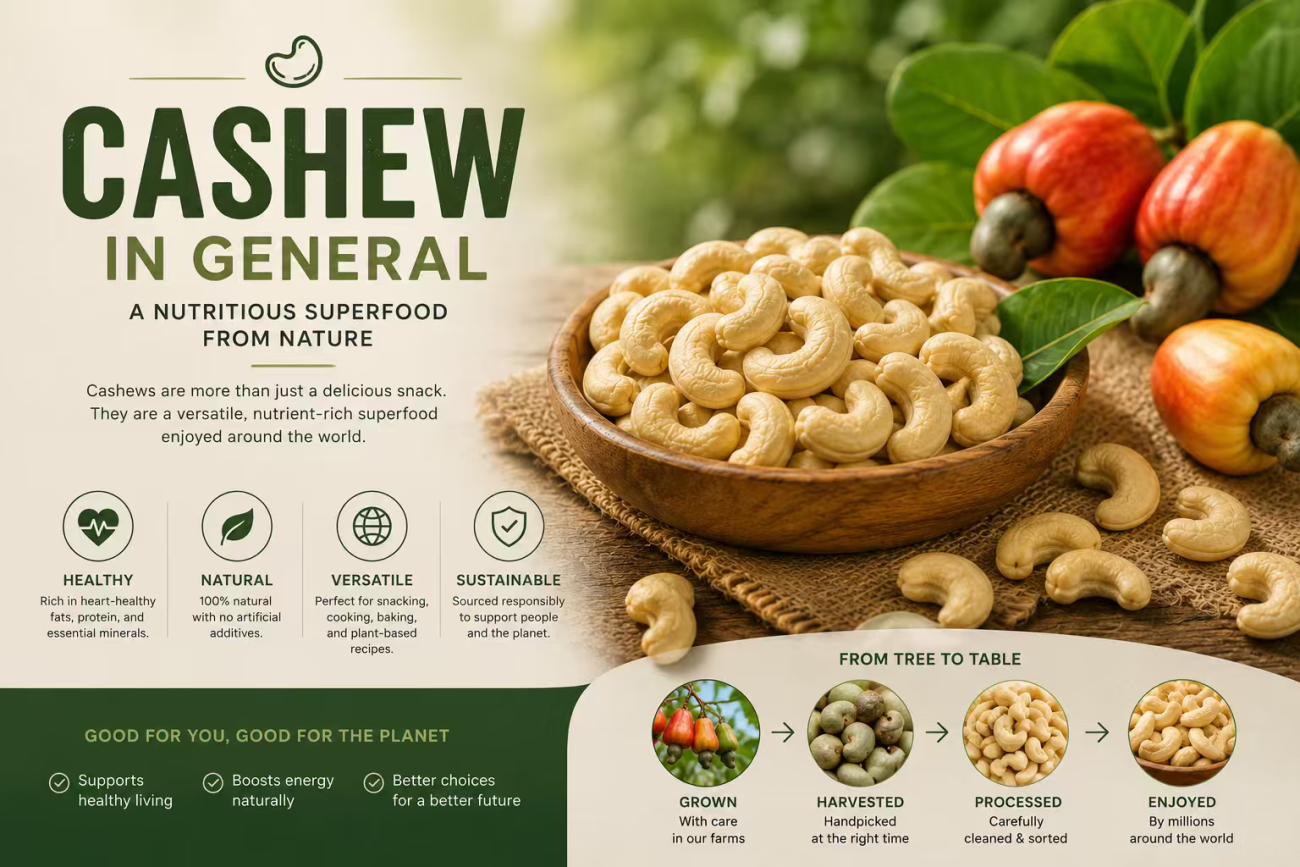
1. Cashew Overview

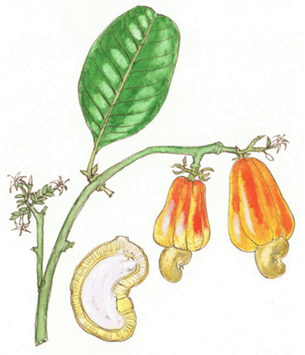
Cashew (Anacardium occidentale L.) belongs to the Anacardiaceae family, which includes around 60 genera and over 400 species. Other well-known members of this family include mango (Mangifera indica L.) and pistachio (Pistacia vera L.).

Cashew trees are evergreen and fast-growing, reaching up to 20 meters under optimal conditions, although they typically grow between 8 and 12 meters.

The species is andromonoecious, meaning that both male and hermaphrodite flowers are present on the same plant, often within the same panicle.

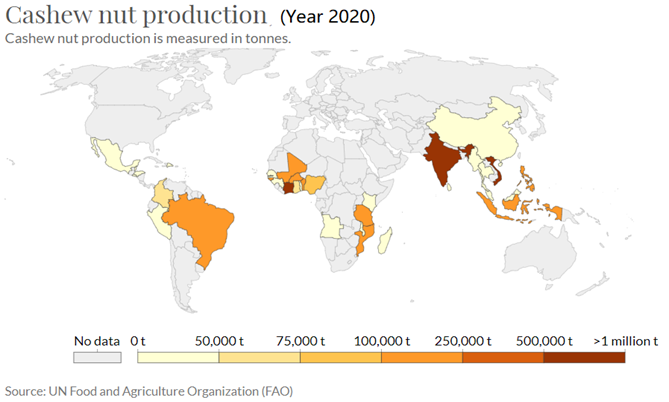
2. Global Production & Growing Regions

Cashew is widely cultivated in tropical regions around the world.

      • – Northern Hemisphere producers: India, Vietnam, West Africa

      • – Southern Hemisphere producers: Brazil, East Africa

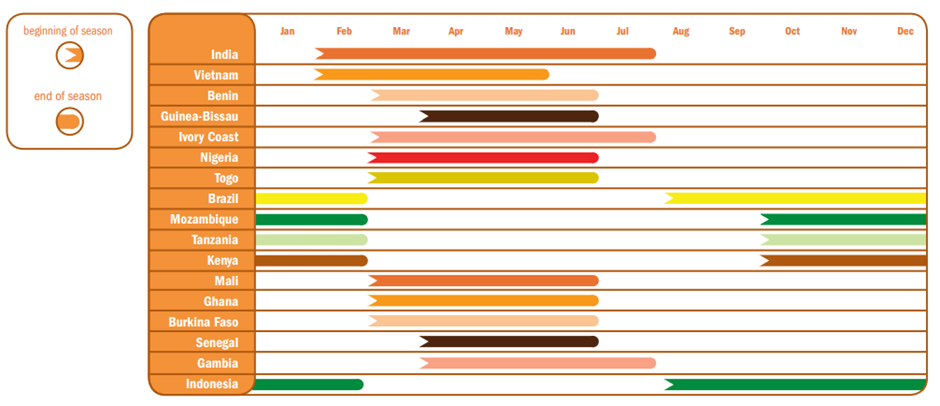
Harvest seasons vary depending on proximity to the equator:

      • – Northern regions: early year to mid-year

      • – Southern regions: October to early the following year

3. Cashew Harvesting

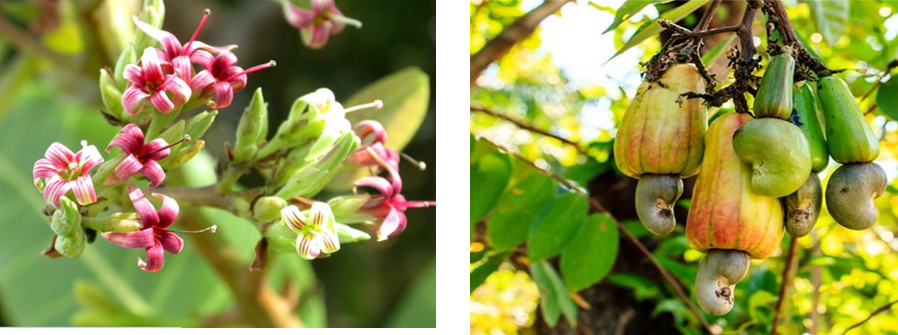
Flowering periods differ by region:

      • – Northern Hemisphere: December – April

      • – Southern Hemisphere: June – December

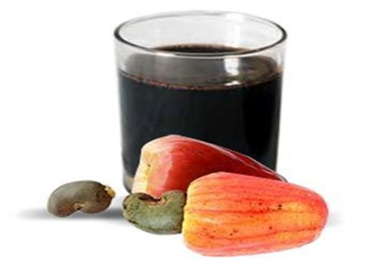
After pollination, the cashew nut develops first, followed by the cashew apple (false fruit).

Key stages:

    • – Nut develops rapidly (reaches ~80% size early)

    • – Apple grows and changes color (green → yellow/red)

    • – Shell hardens and kernel forms inside

    • – Fruit falls naturally when mature

Harvesting is done during dry weather, once apples are fully ripe.

After harvesting:

    • – Nuts are separated from apples

    • – Sun-dried for 2–3 days

    • – Transported to processing facilities

4. Cashew Processing

Traditional Processing Steps:

    1. Roasting
    2. Shelling
    3. Drying
    4. Peeling
    5. Grading
    6. Quality control / fumigation
    7. Packaging

👉 Shelling is traditionally labor-intensive and done manually, but modern processing facilities now use advanced equipment to improve efficiency and consistency.

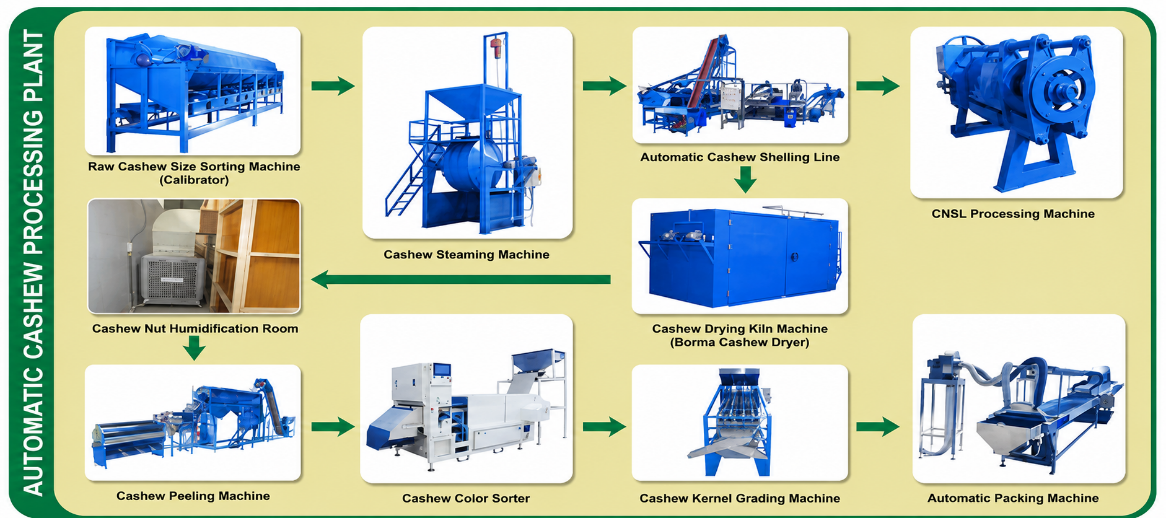
Modern Processing (Automated Factories)

Modern facilities use advanced equipment for:

    • Size sorting

    • Boiling / steaming

    • Mechanical shelling

    • Drying

    • Peeling

    • Automatic grading

    • Quality control

    • Packaging

👉 Automation improves efficiency, consistency, and food safety.

5. Cashew Grades

Cashew kernels are graded based on:

  • – Size
  • – Shape
  • – Color

This grading directly affects pricing.

 Whole Grades (White Wholes)

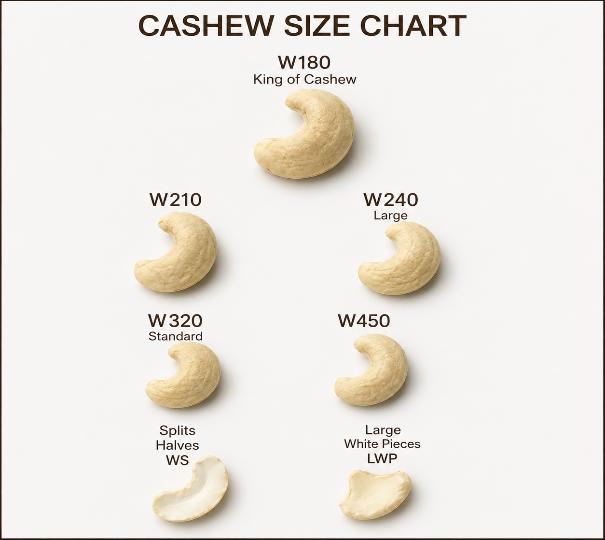
W180 – Largest, premium quality (“King of Cashews”)

W210 – Super Premium quality

W240 – Standard premium grade

W320 – Standard grade, Most popular and widely traded

W450 – Smaller size, more economical

 Other Categories

Scorched Wholes (SW)– Scorched whole kernels

SW240

SW320,

SW

SSW

Dessert Wholes (DW) – Dessert whole kernels.

DW- DW cashew are whole cashew kernels with minor visual imperfections but good flavor and nutritional quality, Appearance variation do not affect processing performance. And idea for cooking, baking, and food processing, especially where kernels are further processed or mixed with other ingredients.

Pieces & Splits

Butts (B) – WB -Cashew kernels broken crosswise into uniform pieces. They retain full cashew flavor and nutritional value at a more competitive price than whole kernels.

Splits (S) – White Splits (WS) – Cashew kernels separated lengthwise, offering a distinctive shape and clean white color, this grade is widely accepted in the global cashew trade. WS cashews are suitable for roasted and seasoned snack products, where split kernels provide visual differentiation.

Large White Pieces (LWP) – consist of white cashew kernels broken into large pieces with a rich, nutty flavor, this grade offers excellent functionality for both snack and industrial processing.

Small White Pieces (SWP) – SWP are white cashew kernels broken into small, uniform pieces and provide consistent quality and cost efficiency for large-scale processing. And widely used in bakery, confectionery, cereals, and industrial food production.

Baby Bits (BB) – veryt small pieces of cashew and similar function of SWP

6. Packaging

There is no single standard, but common export packaging includes:

    • – 22.68 kg(50lb) vacuum-sealed bags

    • – Nitrogen / CO₂ flushing to extend shelf life

    • – Airtight tins for premium storage

7. Quality Assurance

Cashew production follows strict international standards to ensure food safety.

– GAP (Good Agricultural Practices)

– GMP (Good Manufacturing Practices)

– HACCP (Hazard Analysis Critical Control Point)

– BRC (  British Retail Consortium)

These ensure control over:

    • – Contaminants

    • – Pesticide residues

    • – Microbiological safety

8. Cashew Nut Shell Liquid (CNSL)

Cashew shells contain a non-edible oil called CNSL

Characteristics:

Rich in phenolic compounds

Contains:

~70% anacardic acid~18% cardol~5% cardanol

Applications:

– Industrial resins

– Friction materials

– Coatings and chemicals

Why African Cashews for European Buyers

 Why African Cashews for European Buyers

1. Strong Origin Advantage

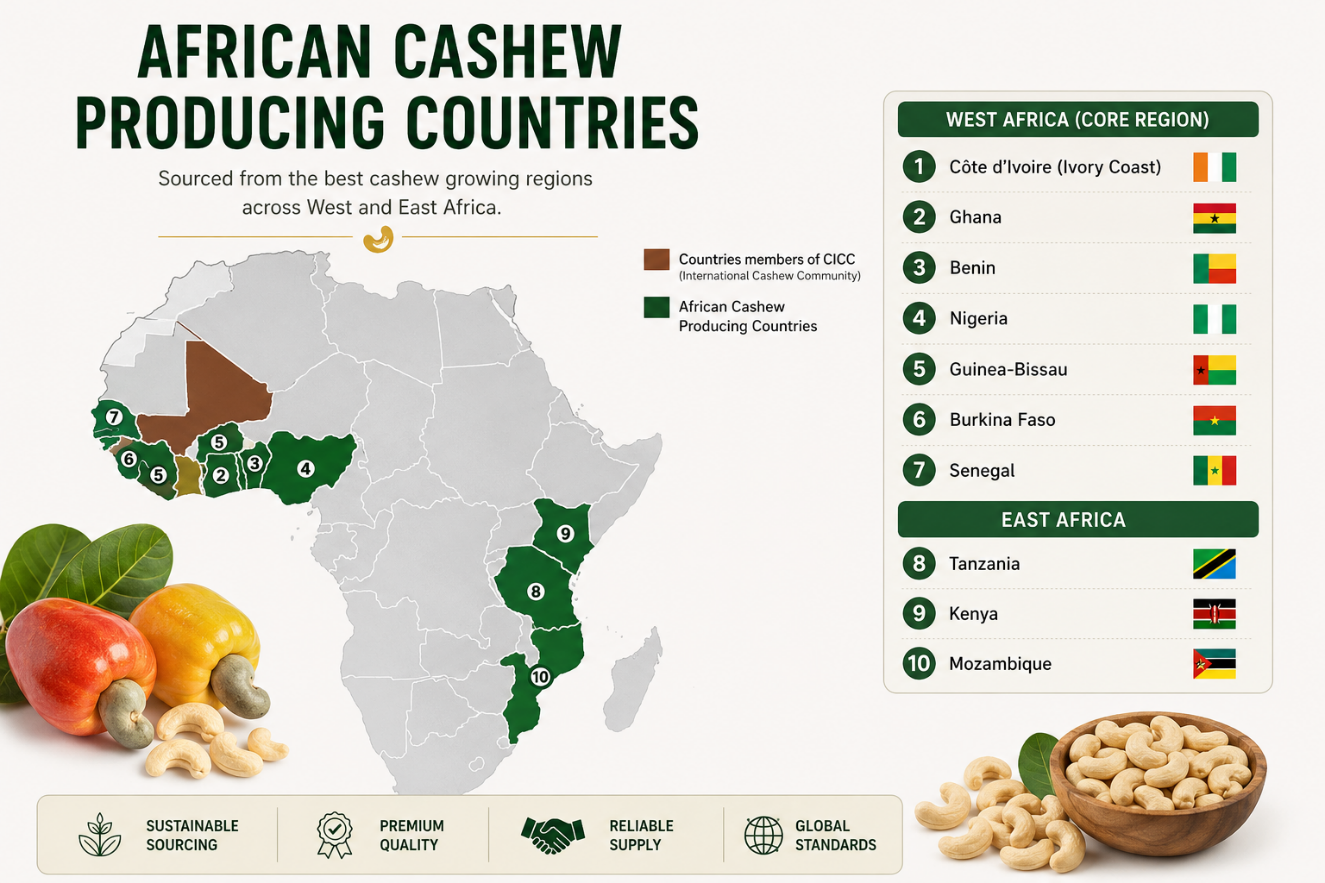
Africa has become one of the world’s leading producers of raw cashew nuts, particularly in countries such as Côte d’Ivoire, Ghana, Nigeria, and Benin.

For European buyers, sourcing from Africa offers:

  • Shorter transit times compared to Asia
  • Fresher raw materials
  • Increasingly stable supply volumes

2. Competitive and Stable Pricing

Compared to some traditional suppliers, African cashews often provide:

  • More competitive pricing
  • Better flexibility for bulk orders
  • Strong value across grades such as W320 and W240

In a volatile global market, price stability is a key advantage for importers and distributors.

3. Growing Processing Capabilities

In recent years, Africa has significantly improved its processing infrastructure.

Modern processing facilities now offer:

  • Automated shelling and grading
  • Improved hygiene standards
  • Consistent kernel quality

4. Compliance with European Standards

African exporters are increasingly aligned with EU requirements.

Most reputable suppliers follow:

  • HACCP (food safety systems)
  • GMP (processing standards)
  • Residue and contamination controls

5. Sustainable and Ethical Sourcing

Sustainability is becoming essential for European markets.

African cashew sourcing supports:

  • Local farming communities
  • Fair trade practices
  • Traceability from farm to export

6. Reliable Supply Chain to Europe

With growing trade links between Africa and Europe:

  • Shipping routes are well established
  • Transit times are efficient
  • Belgium and the Netherlands act as key entry hubs

7. Ideal for European B2B Buyers

African cashews are particularly suitable for:

  • Importers
  • Wholesalers
  • Food manufacturers
  • Snack brands

Especially for widely traded grades such as:

  • W320 (most popular)
  • W240 (premium standard)

🟨 Conclusion

African cashews offer a strong combination of quality, price, and supply reliability for European buyers.

With improving processing standards and closer trade connections, Africa is no longer just a raw material origin — it is becoming a key global supplier of finished cashew kernels.

Looking for a reliable African cashew supplier in Europe?

AFRGO NUTS – We supply premium cashews with consistent quality and dependable delivery across the European market.

👉 Contact us for pricing and samples

Back to Top

Search For Products

Product has been added to your cart